

An IT job is a professional role focused on managing, supporting, and securing an organization’s technology systems, including hardware, software, networks, and data. According to the U.S. Bureau of Labor Statistics, computer and information technology occupations span a wide spectrum, from entry-level support technicians to senior systems architects and research scientists. What ties them together is a shared responsibility: keeping technology working so that the rest of the organization can function.
A well-written IT job description does more than list duties. It signals to the right candidates what the role actually demands, what skills matter most, and what the work environment looks like day to day. Here is what every IT role typically involves:
- Managing and maintaining hardware, software, and network systems
- Troubleshooting technical issues and resolving user-reported problems
- Implementing and monitoring security protocols to protect organizational data
- Designing, configuring, or improving computer-based systems and applications
- Providing technical support to employees or external clients
- Documenting procedures, policies, and system changes for internal reference
- Collaborating with other departments to identify and meet technology needs
What are the most common IT job roles and their responsibilities?
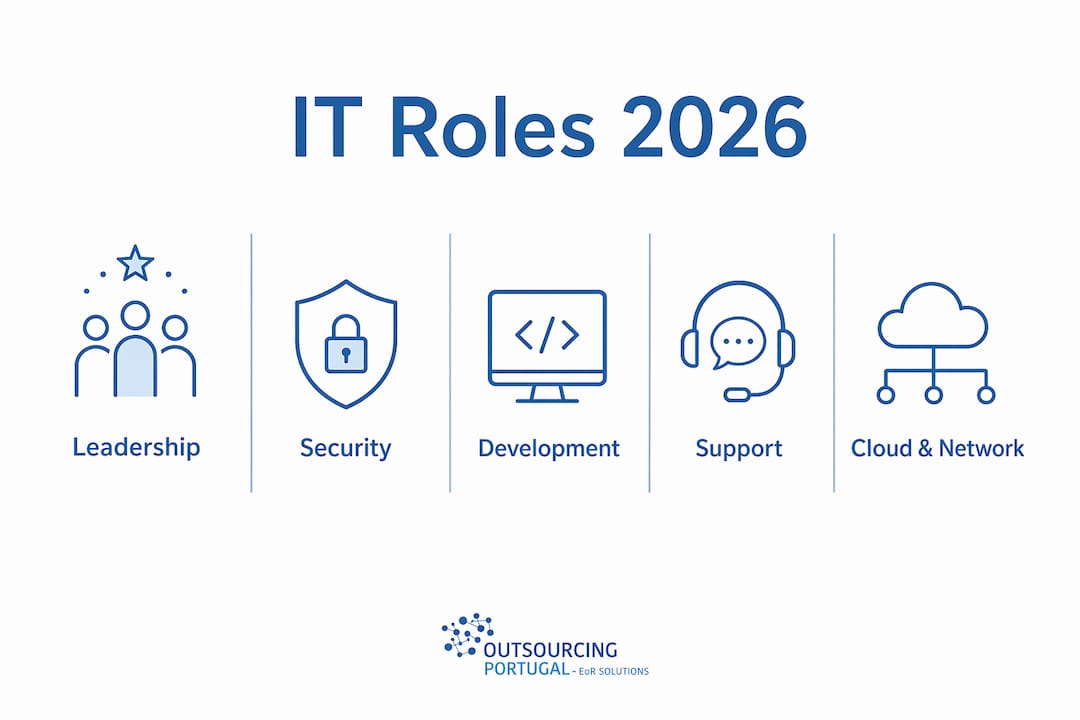
IT covers a broader range of positions than most people outside the field realize. A help desk technician and a software engineer both work in IT, but their daily tasks, required expertise, and career trajectories look almost nothing alike. Understanding those distinctions is the first step to writing a technology job description that actually attracts the right person.
1. IT support specialist
The IT support specialist is often the first point of contact when something breaks. Their primary focus is keeping employees productive by resolving hardware and software issues quickly. Day-to-day duties include logging service requests, updating ticket status, answering questions about computer systems, and generating login credentials for new hires during onboarding.
Junior support specialists typically handle Tier 1 requests: password resets, software installations, and basic connectivity issues. Mid-level specialists take on more complex diagnostics, while senior specialists often manage ticketing systems, mentor junior staff, and identify recurring problems that point to deeper infrastructure issues.
2. IT specialist
The IT specialist role sits a step above pure support. IT specialists install and configure hardware and software, manage user accounts and permissions, monitor network performance, and implement security protocols. They also coordinate with vendors for equipment purchases and warranties, and they run training sessions on tools and security practices for other staff.

A mid-level IT specialist typically brings 2–5 years of hands-on experience across system administration, network management, and technical support. Senior IT specialists move into infrastructure planning, aligning technology decisions with organizational goals and communicating updates to non-technical stakeholders.
3. Network administrator
Network administrators design, implement, and maintain an organization’s communication infrastructure, including local area networks (LANs), wide area networks (WANs), and cloud-based networks. They test network systems, monitor traffic for anomalies, and respond to connectivity failures. The BLS reports a 2024 median pay of $96,800 for network and computer systems administrators, reflecting the specialized knowledge the role demands.
At the senior level, network administrators take on architecture decisions, evaluate new networking technologies, and often manage a small team of junior administrators.
4. Software developer
Software developers design, build, and test the applications and programs that organizations rely on. The BLS reports that software developers earn a median pay indicative of one of the higher-paying IT career profiles. Junior developers focus on writing and testing code under supervision. Mid-level developers own features independently. Senior developers lead architecture decisions, review code from others, and translate business requirements into technical specifications.
5. Information security analyst
Information security analysts plan and execute measures to protect an organization’s networks and systems from threats. Their responsibilities include monitoring for breaches, running vulnerability assessments, and developing incident response plans. The BLS median pay for this role sits at $124,910, and demand is growing fast as cybersecurity threats multiply.
6. Systems analyst
Systems analysts study how an organization uses technology and then design improvements. They bridge the gap between IT teams and business units, translating operational needs into technical requirements. The BLS reports that computer systems analysts earn a median pay consistent with their specialized role. Senior analysts often lead digital transformation projects and present recommendations directly to leadership.
7. Database administrator
Database administrators create, organize, and secure the systems that store an organization’s data. They protect data from unauthorized access, perform backups, and optimize query performance. The BLS median pay for database administrators and architects is $123,100. Organizations with large data environments, such as financial firms and healthcare systems, rely heavily on this role.
8. Web developer
Web developers build and maintain websites, handling everything from front-end layout and navigation to back-end functionality. The BLS reports that web developers and digital designers earn a median pay reflecting their role in website development. Entry-level developers typically work in HTML, CSS, and JavaScript. Senior developers architect full-stack solutions and often manage deployment pipelines and site performance.
9. Cloud computing engineer
Cloud engineers define, design, build, and maintain systems running on platforms like Amazon Web Services (AWS) and Microsoft Azure. As organizations shift infrastructure off physical servers, demand for cloud expertise has grown sharply. This role often requires familiarity with containerization tools, infrastructure-as-code practices, and cloud security frameworks.
10. IT leadership and management
Senior IT leadership draws on both deep technical backgrounds and strong management skills. IT directors and CIOs create and implement policies, manage budgets, and align technology strategy with business objectives. These roles require stakeholder communication, vendor negotiation, and the ability to translate complex technical decisions into language that executives and board members can act on.
What skills, qualifications, and certifications do IT jobs require?
The skills that matter most in an IT role depend on the specific position, but a consistent set of technical and interpersonal competencies appears across nearly every technology job description.
Technical skills
- System administration: Managing operating systems (Windows, Linux, macOS), user accounts, and access controls
- Network troubleshooting: Diagnosing connectivity issues, configuring routers and firewalls, and monitoring network traffic
- Security protocols: Applying IT security best practices, managing vulnerabilities, and responding to incidents
- Hardware and software maintenance: Installing, updating, and repairing physical and digital components
- Cloud platforms: Working with AWS, Microsoft Azure, or Google Cloud for infrastructure and application hosting
- Scripting and coding: Basic scripting in Python or PowerShell for automation; full programming proficiency for developer roles
Soft skills
Communication and empathy are often the deciding factor between two technically equal candidates, especially in support roles. The ability to explain a complex system failure to a non-technical manager without condescension is a skill that takes real practice. Other soft skills that appear consistently across IT position requirements include:
- Problem-solving and critical thinking
- Time management and the ability to prioritize competing requests
- Customer service orientation, particularly for client-facing or help desk roles
- Organization and attention to detail when managing multiple projects simultaneously
Education requirements
Most IT roles require at least an associate or bachelor’s degree in information technology, computer science, or computer engineering. Some employers, particularly for developer and analyst roles, prioritize portfolio quality and demonstrated experience over formal credentials. For IT support and specialist positions, relevant certifications often carry as much weight as a degree.
Certifications
Industry certifications provide standardized proof of competency and are especially valuable for candidates without four-year degrees. Commonly required or preferred certifications across IT roles include:
- CompTIA A+: Entry-level certification covering hardware, software, and troubleshooting fundamentals
- CompTIA Network+: Validates networking knowledge including protocols, infrastructure, and security
- CompTIA Security+: Covers core cybersecurity concepts and is often required for security-focused roles
- Cisco CCNA: Demonstrates networking proficiency and is widely recognized for network administrator positions
- Microsoft certifications (MCITP, Azure): Relevant for roles involving Microsoft environments or cloud infrastructure
- ITIL Foundation: Covers IT service management frameworks, valued in enterprise environments
Certifications like CompTIA A+ and Cisco CCNA regularly help candidates compete for roles where they lack a traditional four-year degree. Hiring managers in IT tend to treat a current, relevant certification as evidence of both competency and commitment to staying current.
Pro Tip: When writing an IT job description, list certifications in two tiers: “required” and “preferred.” Requiring CompTIA A+ for a senior network architect role will screen out strong candidates; listing it as preferred keeps the pool open.
What does the IT job market look like in 2026?
The U.S. IT job market remains one of the most active in the country. The BLS projects strong growth across computer and information technology occupations, driven by continued digital transformation, expanding cloud adoption, and rising demand for cybersecurity expertise. Organizations across every sector, from healthcare to finance to manufacturing, are building or expanding their IT teams.

Median salaries for key IT roles (2024 BLS data)
| IT Role | 2024 Median Annual Pay | Typical Entry-Level Education |
|---|---|---|
| Software Developers, QA Analysts & Testers | $124,910 | Bachelor’s degree |
| Computer Network Architects | $123,100 | Bachelor’s degree |
| Information Security Analysts | $124,910 | Bachelor’s degree |
| Database Administrators and Architects | $123,100 | Bachelor’s degree |
| Computer and Information Research Scientists | — | Master’s degree |
| Computer Systems Analysts | $96,800 | Bachelor’s degree |
| Network and Computer Systems Administrators | $96,800 | Bachelor’s degree |
| Computer Programmers | — | Bachelor’s degree |
| Web Developers and Digital Designers | — | Bachelor’s degree |
| Computer Support Specialists | — | Varies |
Salary note: IT support roles show the widest pay range across experience levels. According to Indeed, IT support salaries average $44,389 per year, with hourly rates typically ranging from $7–$56 depending on geography, certifications, and experience.
Entry-level positions in support and administration typically sit at the lower end of each role’s range, while senior professionals with specialized certifications or management responsibilities command salaries well above the median. Geographic location also plays a significant role: IT professionals in San Francisco, New York, and Seattle consistently earn more than the national median, while those in smaller markets may earn less.
The cybersecurity segment deserves particular attention. As data breaches grow in frequency and severity, organizations are prioritizing information security analyst hires. This pressure on the talent supply keeps salaries for security-focused roles elevated and makes security expertise one of the most valuable differentiators on any IT resume or job posting.
How to write an effective IT job description
A poorly written job description costs real money. It generates a flood of unqualified applications, buries the role in generic language, and signals to strong candidates that the organization does not know what it actually needs. Clear, bulleted responsibilities and realistic role expectations consistently produce higher-quality applicants.
Structure your description in five sections
- Role summary: Two to four sentences describing the position’s core purpose, who the hire will report to, and the team context. Avoid vague phrases like “dynamic environment” or “fast-paced team.”
- Key responsibilities: A bulleted list of 8–12 specific duties. Start each bullet with an action verb (install, configure, monitor, troubleshoot). Be specific enough that a candidate can picture a Tuesday afternoon in the role.
- Required skills and qualifications: Separate the non-negotiables from the nice-to-haves. List the operating systems, tools, and technologies the person will use on day one.
- Certifications and education: State the minimum education level and list required certifications explicitly. If a certification is preferred but not required, say so.
- Legal and compliance statements: Include an Equal Employment Opportunity (EEO) statement. Under U.S. federal law, job postings must not discriminate based on race, color, religion, sex, national origin, age, disability, or genetic information. Many organizations also add ADA accommodation language and, where applicable, statements about background check requirements.
Differentiate by experience level
The gap between a junior and senior IT role is not just years of experience. Entry-level roles focus on execution: installing systems, resolving tickets, and following documented procedures. Senior roles require strategic thinking, stakeholder communication, and the ability to align technology decisions with business goals. Your job description should reflect that difference explicitly, not just in the title.
For a junior IT support role, the qualifications section might require a CompTIA A+ certification and one year of experience. For a senior network administrator, you would specify CCNA or equivalent, five or more years of hands-on network management, and experience presenting infrastructure recommendations to leadership.
Specify the work environment clearly
Physical presence requirements belong in the job description, not in the first interview. Many IT roles require on-site access to hardware, server rooms, or physical infrastructure that cannot be managed remotely. Others are fully remote. Candidates who apply without knowing this detail waste everyone’s time. State it plainly in the role summary or in a dedicated “Work Environment” line.
Pro Tip: If the role requires occasional on-site work even when primarily remote, say “primarily remote with monthly on-site visits” rather than just “remote.” Ambiguity here is one of the top reasons candidates withdraw after an offer.
IT specialist job description sample
Job Title: IT Specialist
Reports to: IT Manager
Location: [City, State] / Hybrid
Role Summary: We are looking for an IT Specialist to maintain, configure, and support our organization’s hardware, software, and network systems. You will serve as a primary point of contact for technical issues and work closely with department heads to identify and implement technology solutions.
Key Responsibilities:
- Install, configure, and maintain hardware, software, and network systems
- Troubleshoot IT issues and resolve system outages for end users
- Manage user accounts, permissions, and access controls
- Monitor network performance and respond to connectivity issues
- Implement and maintain IT security protocols and data protection measures
- Coordinate with vendors for equipment purchases and support contracts
- Document IT policies, procedures, and troubleshooting guides
- Conduct training sessions on tools and security practices for staff
Required Qualifications:
- Bachelor’s degree in Information Technology, Computer Science, or a related field, or equivalent experience
- 2–5 years of experience in IT support, system administration, or a related role
- Proficiency in Windows, Linux, and macOS operating systems
- Knowledge of network protocols, firewalls, and security best practices
- CompTIA A+ or Network+ certification (or equivalent)
Preferred Qualifications:
- Cisco CCNA or Microsoft Azure certification
- Experience with cloud platforms (AWS, Azure, or Google Cloud)
- Familiarity with ITIL service management frameworks
Equal Opportunity Statement: [Company Name] is an equal opportunity employer. We do not discriminate on the basis of race, color, religion, sex, national origin, age, disability, or any other characteristic protected by applicable federal, state, or local law.
For organizations building or expanding IT teams internationally, particularly in European markets, IT recruitment in Portugal follows many of the same structural principles but requires attention to local labor law, contract requirements, and EU compliance standards. Getting the job description right from the start makes that process considerably smoother.
For IT roles that involve documentation, localization, or client-facing content across multiple languages, working with a specialist like Glocco’s IT translation services can prevent costly miscommunication in multinational hiring processes.
Key Takeaways
An IT job description that specifies exact duties, required certifications, experience level, and work environment consistently attracts better candidates than one built on generic language.
| Point | Details |
|---|---|
| Salary range varies widely by role | BLS 2024 median pay spans from — for support specialists to — for research scientists. |
| Certifications substitute for degrees | CompTIA A+ and Cisco CCNA help candidates without four-year degrees compete for IT roles. |
| Senior roles require strategic skills | Entry-level IT focuses on execution; senior positions demand stakeholder communication and business alignment. |
| Work environment must be explicit | State on-site, hybrid, or remote requirements clearly to avoid mismatched applicants. |
| EEO language is legally required | U.S. job descriptions must include equal opportunity statements to comply with federal anti-discrimination law. |
Hiring IT talent across borders? Outsourcing-portugal can help

If your organization is building an IT team outside the U.S., getting the job description right is only the first step. Compliance with local employment law, payroll management, and onboarding logistics add layers of complexity that slow down hiring and create legal exposure. Outsourcing-portugal specializes in exactly this: helping international companies hire, onboard, and manage IT professionals in Portugal without setting up a local entity.
Portugal offers a highly educated, English-proficient tech workforce at competitive labor costs, making it one of the most practical nearshore options for U.S. and European companies scaling their IT operations. Outsourcing-portugal handles the Employer of Record (EOR) structure, payroll, and legal compliance so your team can focus on finding the right people.
Explore employment outsourcing services or learn more about EOR solutions in Portugal to see how the process works.