

The fastest path to remote work in 2026 runs through specialized job boards combined with a disciplined, targeted search strategy. Generic boards like Indeed and LinkedIn mix remote and on-site listings, which wastes time. Dedicated platforms cut through that noise. Here are the key platforms and moves that actually work:
- FlexJobs — paid, hand-screened listings across dozens of industries; zero scams
- We Work Remotely — one of the largest boards, strongest in tech, design, and marketing
- Remote.co — curated fully remote roles with visible company remote culture policies
- Remotive.io — tech and product roles plus an active Slack community for networking
- Jobspresso — handpicked jobs in tech, marketing, customer support, and design
- Wellfound — startup and pre-IPO remote roles, often with equity compensation
- Arc — developer-focused with coding challenges and global reach
- Contra — freelance and contract marketplace built around independent professionals
- JustRemote — global listings with strong filters for part-time and fully remote roles
- The Mom Project — family-friendly remote roles for parents balancing career and home
- Remote OK — real-time developer and tech feed with salary transparency
- NoDesk — curated listings plus a newsletter and remote work resource hub
- Remotive — community-driven curation with a Slack group for tech professionals
Set job alerts on two or three of these platforms, apply within 24 hours of a posting going live, and tailor every application to the specific role. Hiring timelines vary, generally faster for customer support roles and longer for technical positions.
Which remote job platforms should you use in 2026?
Every platform above serves a different kind of job seeker. The table below maps each one to its core niche, job types, and what sets it apart.

| Platform | Focus / Niche | Job Types | Standout Feature | Pricing |
|---|---|---|---|---|
| FlexJobs | Multi-industry, vetted | Full-time, part-time, freelance | Hand-screened listings; no scams | Paid subscription |
| We Work Remotely | Tech, design, marketing | Full-time, contract | Large active board; frequent postings | Free to browse |
| Remote.co | Diverse, fully remote | Full-time, part-time | Company remote culture transparency | Free |
| Remotive.io | Tech, product, engineering | Full-time | Slack community + curated listings | Free |
| Jobspresso | Tech, marketing, support | Full-time, freelance | Detailed company info per listing | Free |
| Wellfound | Startups, pre-IPO | Full-time, equity roles | AngelList profile integration | Free |
| Arc | Software development | Full-time, contract | Coding challenges and screening tools | Free |
| Contra | Freelance, independent work | Contract, gig | Profile-driven matching | Free |
| JustRemote | Multi-field, global | Full-time, part-time, freelance | Global filters, real-time updates | Free / Premium |
| The Mom Project | Family-friendly careers | Full-time, flexible | Employer network supporting parents | Free |
| Remote OK | Tech, developer-heavy | Full-time, contract | Real-time feed with salary data | Free |
| NoDesk | Tech, marketing, support | Full-time | Newsletter + resource aggregation | Free |
| Remotive | Tech, product | Full-time | Community-driven curation | Free |
A few platforms deserve extra context. FlexJobs charges a subscription fee, but its team spends over 200 hours per day verifying listings, which eliminates the scam risk that plagues free boards. Wellfound’s deep integration with AngelList profiles means your startup job search and your professional presence work together automatically. Arc goes further than most developer boards by running coding challenges and screening support before you ever reach a hiring manager. Contra is built differently from the rest: it centers on your independent professional profile rather than a traditional resume, which suits freelancers who want to showcase a body of work rather than a job history.
For job seekers outside tech, Remote.co and The Mom Project fill gaps the developer-heavy boards ignore. Remote.co publishes each company’s remote work policy alongside listings, so you can assess culture fit before applying. The Mom Project connects parents with employers who have explicitly committed to flexible, family-supportive work arrangements.
Pro Tip: Check company career pages directly for your top 20 target employers. Roles posted there often see fewer applicants than the same listing on an aggregator, because most job seekers never look.
How to actually land a remote job, not just find one
Finding listings is the easy part. Getting hired requires a different approach than a standard office job search.
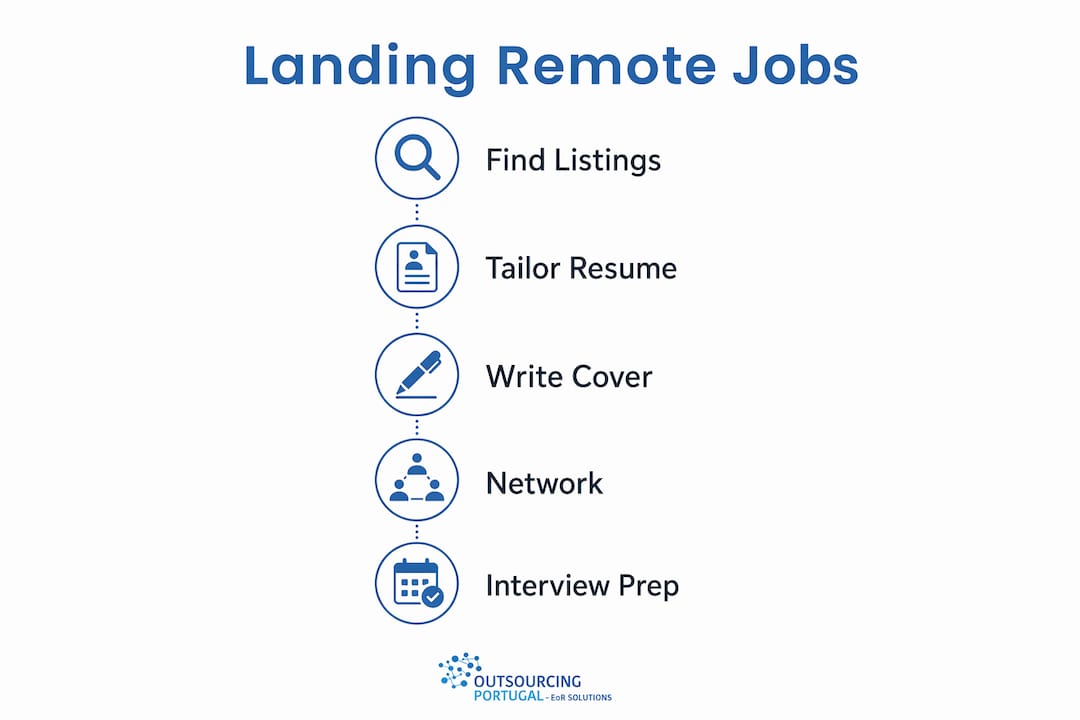
Applying to a moderate number of tailored jobs per week is the right volume to maintain quality. Beyond that, cover letter quality drops, applications start to feel generic, and response rates fall. Quality beats quantity every time.
Your resume needs to pass AI screening before a human sees it. Mirror the job posting’s exact language, list tools explicitly (Slack, Notion, Asana, Loom), and lead with quantified results rather than responsibilities. Clean formatting matters too: no tables, text boxes, or multi-column layouts that break applicant tracking systems.
Remote employers weigh written communication skills heavily, often as much as technical expertise. Your cover letter is a live sample of how you’ll communicate on Slack. If it rambles, hiring managers assume your async messages will too. Keep it tight, reference something specific about the company, and connect it directly to your background.
Networking and referrals convert at a higher rate than cold applications. Connect with people at remote-first companies, engage with their content consistently, and aim for warm introductions before you submit anything. A referral doesn’t guarantee an offer, but it gets your resume read by a person instead of a parser.
Identify deal-breakers early: mandatory return-to-office clauses, camera-on-all-day policies, or six-plus hours of daily meetings. Screening these out upfront saves weeks of wasted effort on roles that were never going to work.
Also be ready to speak to your home office setup, your async communication style, and your time zone overlap. Remote companies evaluate your ability to work remotely, not just your credentials. See the remote team onboarding guide for a clear picture of what employers assess during this process.
What fields hire remotely, and how long does it take?
Remote work is not evenly distributed across industries. Information Technology leads in volume, followed by Customer Service and Human Resources. Other fields with consistent remote availability include:
- Information Technology — software development, DevOps, data engineering, cybersecurity
- Customer Service — support specialists, account managers, success roles
- Human Resources — recruiters, HR generalists, people operations
- Marketing — content, SEO, paid media, brand management
- Writing and Editing — copywriters, technical writers, editors
- Project Management — program managers, operations leads
- Virtual Assistance — executive assistants, administrative coordinators
Thousands of new remote positions post weekly across major platforms. Hiring speed varies sharply by role type. Customer support and entry-level positions typically move in a few weeks. Technical and senior roles can take several months. Executive searches often take longer.
Remote job search timelines generally range from a few weeks to several months, and longer for senior positions. Plan accordingly and don’t treat two weeks of silence as failure.
Location restrictions matter more than many job seekers expect. Some roles require U.S.-based candidates for tax or legal reasons. Others specify core hours in EST or PST. Read every listing’s location section before applying.
Outsourcing-portugal offers a compliant path for global remote hiring
The job boards above serve individual job seekers well. But for companies building remote teams across borders, or for professionals seeking employment through a compliant international structure, a different approach exists.
Outsourcing-portugal provides Employer of Record services that let international companies hire in Portugal without setting up a local entity. That means payroll, legal compliance, onboarding, and HR support handled end-to-end, with access to Portugal’s multilingual, highly educated workforce at competitive labor costs.
For remote workers, this structure offers employment contracts that meet EU legal standards, full benefits, and clarity on tax obligations. For employers, it removes the compliance risk that comes with hiring across borders independently.
- Fully compliant employment contracts under Portuguese and EU law
- Payroll processing and tax filing handled locally
- Onboarding and HR support for distributed teams
- Access to Portugal’s talent pool across tech, customer service, and professional services
- No local entity required to start hiring
If you’re a company building a nearshore team or a professional exploring compliant remote employment in Europe, Outsourcing-portugal is worth a direct conversation.
Key Takeaways
Specialized remote job boards combined with targeted, tailored applications consistently outperform broad searches on general platforms.
| Point | Details |
|---|---|
| Use specialized boards | Platforms like FlexJobs, We Work Remotely, and Remote OK filter out hybrid and on-site noise. |
| Apply 10–15 times per week | Applying to 10–15 highly tailored jobs per week is optimal for maintaining quality and boosting response rates; mass applying lowers your chances. |
| Apply within 24 hours | Early applicants get significantly more recruiter visibility on most platforms. |
| Expect realistic timelines | Remote job searches typically take a few weeks to several months, with senior positions requiring more time. |
| Outsourcing-portugal | Offers compliant Employer of Record hiring in Portugal for companies building remote teams across borders. |
What remote hiring actually rewards in 2026
The conventional advice says apply everywhere and see what sticks. That approach burns people out and produces almost nothing. What actually works is narrower than most job seekers expect.
Remote hiring rewards clarity above almost everything else. When you know exactly which role you’re targeting, your resume, LinkedIn profile, and networking conversations all reinforce the same story. Hiring managers at distributed companies read dozens of applications from qualified people. The ones who stand out aren’t necessarily the most experienced. They’re the ones whose materials make it immediately obvious why this role, at this company, fits their background.
The ATS and AI screening layer has made generic applications nearly invisible. A resume that mirrors the job posting’s language and lists tools explicitly gets past the parser. One that doesn’t, regardless of the candidate’s actual ability, often doesn’t reach a human at all.
Networking feels slow, but it’s the highest-converting activity in a remote job search. A warm introduction from someone inside the company collapses the trust gap that cold applications can’t bridge. The best time to build those relationships is before you need them.