

Many HR managers believe talent acquisition is simply another term for recruitment. In reality, it represents a comprehensive strategic framework that aligns workforce planning with business objectives, particularly critical for multinational corporations expanding into Portugal’s dynamic market. For companies seeking to build remote teams while maintaining full compliance, understanding this distinction becomes essential. This article explores what talent acquisition truly means, the unique challenges multinationals face in Portugal, and proven strategies to succeed in remote hiring while ensuring legal compliance.
Table of Contents
- Key takeaways
- Understanding talent acquisition: definition and strategic importance
- Talent acquisition challenges in Portugal for multinational corporations
- Effective talent acquisition strategies for remote hiring and compliance in Portugal
- How talent acquisition supports business growth for consulting and outsourcing firms in Portugal
- Explore expert talent acquisition support and payroll services in Portugal
- Frequently asked questions
Key Takeaways
| Point | Details |
|---|---|
| Strategic talent acquisition | Talent acquisition is a holistic approach that aligns workforce planning with business goals to create sustainable competitive advantages. |
| Portugal compliance focus | In Portugal, talent acquisition must navigate labor laws, employee protections, and termination procedures to ensure full legal compliance for remote hires. |
| Remote hiring practices | Remote hiring expands talent pools but requires robust sourcing, virtual assessments, digital onboarding, and cross border compliance processes. |
| Employer of record | Adopting EoR services can simplify compliance and payroll when hiring remote workers across borders. |
| Build talent community | Proactively engaging potential candidates through content, webinars, and events creates a ready pipeline before openings. |
Understanding talent acquisition: definition and strategic importance
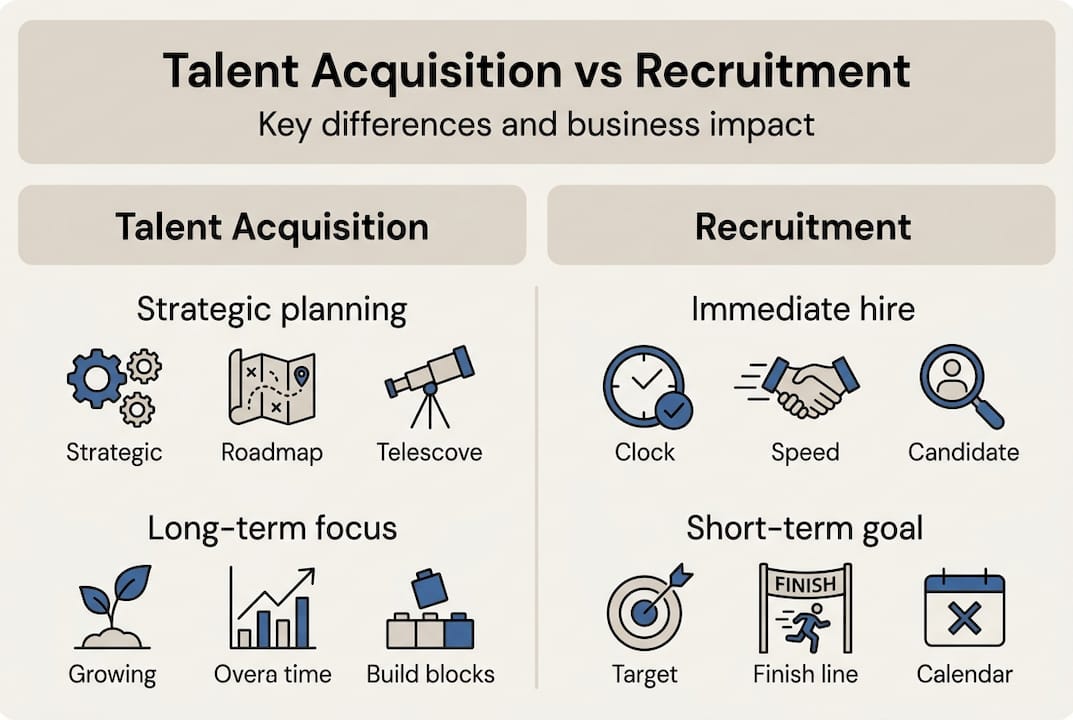
Talent acquisition represents a holistic and strategic approach to sourcing, attracting, selecting, and retaining skilled employees. Unlike traditional recruitment, which focuses on filling immediate vacancies, talent acquisition encompasses long-term workforce planning, employer brand development, candidate experience optimization, and employee retention strategies. This comprehensive framework aligns hiring initiatives with broader business objectives, creating sustainable competitive advantages for organizations operating in global markets.
For multinational corporations, talent acquisition serves as a critical driver of business growth and operational excellence. The strategic nature of this function enables companies to anticipate future skill requirements, build talent pipelines proactively, and adapt quickly to changing market conditions. When organizations expand to Portugal, they gain access to a highly educated, multilingual workforce with strong technical capabilities, making strategic talent acquisition even more valuable.
The distinction between recruitment and talent acquisition becomes particularly important in remote hiring scenarios. Recruitment typically operates reactively, responding to immediate needs with short-term solutions. Talent acquisition, conversely, takes a proactive stance, continuously engaging with potential candidates, nurturing relationships, and building employer brand awareness. This ongoing engagement proves essential when competing for top talent in competitive markets like Portugal’s thriving tech sector.
Remote hiring introduces additional complexity requiring strategic adjustments:
- Sourcing strategies must leverage digital platforms and global networks effectively
- Candidate assessment processes need virtual interview protocols and remote skills evaluation
- Onboarding programs require comprehensive digital resources and cultural integration support
- Compliance frameworks must address cross-border employment regulations and tax implications
Pro Tip: Build a talent community before you need to hire. Engage potential candidates through content marketing, webinars, and networking events to create a ready pipeline when positions open.
Talent acquisition challenges in Portugal for multinational corporations
Multinational corporations face distinct obstacles when implementing talent acquisition strategies in Portugal, particularly regarding legal compliance and remote work arrangements. Portuguese labor law establishes comprehensive employee protections, mandatory benefits, and specific termination procedures that differ significantly from regulations in other jurisdictions. Hiring in Portugal requires navigating complex labor laws and ensuring full legal compliance for remote employees, making expert guidance essential for success.

Cultural considerations significantly impact talent attraction and retention effectiveness. Portuguese professionals value work-life balance, career development opportunities, and organizational culture alignment when evaluating employment opportunities. Companies that fail to recognize these preferences risk losing top candidates to competitors who better understand local expectations. Additionally, communication styles, decision-making processes, and management approaches require cultural adaptation to build effective remote teams.
Competition for skilled multilingual talent has intensified as more international companies recognize Portugal’s advantages. Portugal’s tech industry continues expanding rapidly, creating high demand for software developers, data scientists, and digital marketing specialists. English proficiency among Portuguese professionals ranks among Europe’s highest, making them particularly attractive for multinational operations requiring cross-border collaboration.
Remote hiring amplifies operational challenges that require systematic solutions:
- Contract management must comply with Portuguese employment law while accommodating remote work arrangements
- Payroll processing requires accurate calculation of social security contributions, tax withholdings, and mandatory benefits
- Benefits administration must meet local standards including health insurance, meal allowances, and vacation entitlements
- Performance management needs clear metrics and regular communication protocols for distributed teams
“The complexity of Portuguese labor regulations combined with remote work compliance creates significant risk exposure for companies without local expertise. Even minor errors in contract terms or payroll calculations can result in substantial penalties and reputational damage.”
Time zone differences, while minimal between Portugal and other European markets, can complicate coordination with operations in Asia or the Americas. Organizations must establish clear communication protocols, overlapping work hours, and asynchronous collaboration tools to maintain productivity. Contact outsourcing Portugal experts to navigate these challenges effectively and build compliant remote teams.
Effective talent acquisition strategies for remote hiring and compliance in Portugal
Successful talent acquisition in Portugal requires systematic approaches addressing both remote work logistics and legal compliance requirements. Organizations should implement structured processes that balance speed with thoroughness, ensuring quality hires while maintaining regulatory adherence.
Follow these steps for effective remote hiring in Portugal:
- Define precise role requirements including technical skills, language proficiency, and cultural fit criteria
- Develop compelling job descriptions highlighting remote work benefits, career development opportunities, and company culture
- Leverage multiple sourcing channels including LinkedIn, local job boards, university partnerships, and professional networks
- Implement structured virtual interview processes with behavioral questions, technical assessments, and cultural fit evaluation
- Conduct thorough reference checks and background verification appropriate for remote positions
- Prepare comprehensive offer packages meeting Portuguese legal requirements and market competitive standards
- Execute compliant employment contracts addressing remote work specifics, data protection, and intellectual property
- Design robust onboarding programs with digital resources, mentor assignments, and regular check-ins
Implementing Employer of Record services in Portugal streamlines payroll, benefits, and compliance for remote teams. The comparison between EoR and direct employment reveals distinct advantages:
| Factor | EoR services | Direct employment |
|---|---|---|
| Setup time | 1-2 weeks | 3-6 months |
| Legal entity required | No | Yes |
| Compliance responsibility | EoR provider | Company |
| Payroll complexity | Fully managed | Internal resources needed |
| Scalability | High flexibility | Limited by infrastructure |
| Cost structure | Predictable monthly fees | Variable setup and operational costs |
Building employer brand specifically for the Portuguese market accelerates talent attraction significantly. Companies should showcase their commitment to work-life balance, professional development, and inclusive culture through targeted content marketing. Highlighting successful remote team members, sharing company values, and demonstrating career progression opportunities resonates strongly with Portuguese professionals.
Technology integration streamlines candidate screening and onboarding processes. Applicant tracking systems with AI-powered resume screening reduce time-to-hire while maintaining quality standards. Video interviewing platforms enable efficient candidate assessment across time zones. Digital onboarding portals provide new hires with comprehensive resources, reducing administrative burden and improving early engagement.
Pro Tip: Create a dedicated Portugal talent acquisition playbook documenting your processes, compliance requirements, and cultural insights. This resource ensures consistency across hiring managers and accelerates knowledge transfer as your team grows.
Consider scaling tech teams in Portugal through phased expansion. Start with pilot hires to test processes, gather market intelligence, and refine your approach before committing to larger team builds. This measured strategy reduces risk while building organizational capability. Additionally, sourcing multilingual talent in Portugal provides competitive advantages for companies serving diverse international markets.
How talent acquisition supports business growth for consulting and outsourcing firms in Portugal
Strategic talent acquisition enables faster scaling and reduces costs for service firms expanding in Portugal. Consulting and outsourcing companies depend heavily on human capital quality, making talent acquisition effectiveness directly correlated with revenue growth and client satisfaction. Organizations with mature talent acquisition functions achieve 70% faster time-to-productivity for new hires compared to those using reactive recruitment approaches.
Operational agility represents a critical competitive advantage in dynamic service industries. Companies with robust talent pipelines respond quickly to client demands, scale teams efficiently for new projects, and maintain service quality during rapid growth. This flexibility enables consulting firms to pursue larger contracts confidently, knowing they can staff engagements appropriately. Outsourcing providers similarly benefit from the ability to quickly assemble specialized teams matching specific client requirements.
Compliance adherence minimizes legal risks that could derail business operations:
- Proper employment classification prevents misclassification penalties and tax liabilities
- Accurate contract terms protect intellectual property and confidentiality requirements
- Compliant payroll processing avoids social security disputes and employee grievances
- Appropriate benefits administration maintains employee satisfaction and regulatory compliance
Employee retention directly impacts profitability for service organizations. Replacing skilled consultants or service delivery professionals costs 150-200% of annual salary when accounting for recruitment expenses, productivity loss, and knowledge transfer requirements. Strategic talent acquisition addresses retention through careful cultural fit assessment, realistic job previews, and alignment between candidate expectations and organizational reality.
The cost-benefit analysis of talent acquisition investment reveals compelling returns:
| Metric | Traditional recruitment | Strategic talent acquisition |
|---|---|---|
| Time to fill | 45-60 days | 25-35 days |
| Quality of hire score | 65-70% | 85-90% |
| First year retention | 70-75% | 88-92% |
| Cost per hire | €4,500-€6,000 | €3,800-€5,200 |
| Revenue per employee | €145,000 | €178,000 |
Employee engagement levels increase when organizations demonstrate commitment to strategic talent management. Professionals appreciate working for companies that invest in employer branding, maintain transparent communication, and provide clear career pathways. This engagement translates into higher productivity, better client relationships, and stronger referral networks for future hiring.
For firms expanding to Portugal for tech teams, talent acquisition excellence becomes a market differentiator. Companies known for quality hiring practices attract better candidates, command premium pricing from clients, and build sustainable competitive moats. The investment in talent acquisition infrastructure pays dividends through improved business outcomes, reduced operational risks, and enhanced organizational reputation.
Explore expert talent acquisition support and payroll services in Portugal
Navigating Portugal’s talent landscape requires specialized expertise combining local market knowledge with international best practices. Outsourcing Portugal delivers comprehensive employment Portugal hiring services designed specifically for multinational corporations seeking to build remote teams efficiently while maintaining full compliance. Our solutions eliminate the complexity of cross-border employment, enabling you to focus on core business objectives.
Our Employer of Record Portugal services handle all legal, payroll, and administrative responsibilities, allowing you to hire top Portuguese talent within weeks rather than months. We manage employment contracts, monthly payroll processing, tax compliance, social security contributions, and benefits administration. This comprehensive support ensures your remote teams operate smoothly while you maintain complete control over day-to-day management and strategic direction. Contact outsourcing Portugal experts today for a free consultation on optimizing your talent acquisition strategy.
Frequently asked questions
What is the difference between talent acquisition and recruitment?
Talent acquisition represents a strategic, ongoing function focused on long-term workforce planning, employer branding, and organizational culture development. Recruitment operates as a tactical, transactional process addressing immediate hiring needs. Talent acquisition professionals build relationships with potential candidates continuously, even when no positions are open, creating ready pipelines for future needs. This proactive approach reduces time-to-hire and improves quality-of-hire metrics significantly compared to reactive recruitment methods.
How does Employer of Record simplify remote hiring in Portugal?
Employer of Record services act as the legal employer for your Portuguese team members, handling all compliance, payroll, and administrative responsibilities. This arrangement eliminates the need to establish a local entity, dramatically reducing setup time from months to weeks. EoR providers manage employment contracts, tax withholdings, social security contributions, benefits administration, and regulatory reporting. Companies maintain full operational control over daily management while the EoR handles legal and administrative complexity, enabling faster market entry with minimal risk exposure.
What are key compliance considerations when hiring remote employees in Portugal?
Portuguese labor law requires specific contract terms, mandatory benefits, and employee protections that differ from other jurisdictions. Employers must provide written contracts within 60 days, comply with maximum working hour regulations, and respect minimum notice periods for termination. Payroll processing must accurately calculate social security contributions at current rates, apply progressive income tax withholding, and include mandatory benefits like meal allowances and vacation pay. Remote work arrangements require additional considerations around data protection, equipment provision, and health and safety responsibilities. Working with local compliance experts ensures adherence to all requirements while avoiding costly penalties.