

TL;DR:
- Cultural compatibility influences organizational profitability, retention, and successful cross-border mergers. Prioritizing defined values and norms reduces friction, improves decision-making, and lowers turnover costs. Continuous focus on alignment, assessment, and explicit norm-setting helps build productive, diverse international teams.
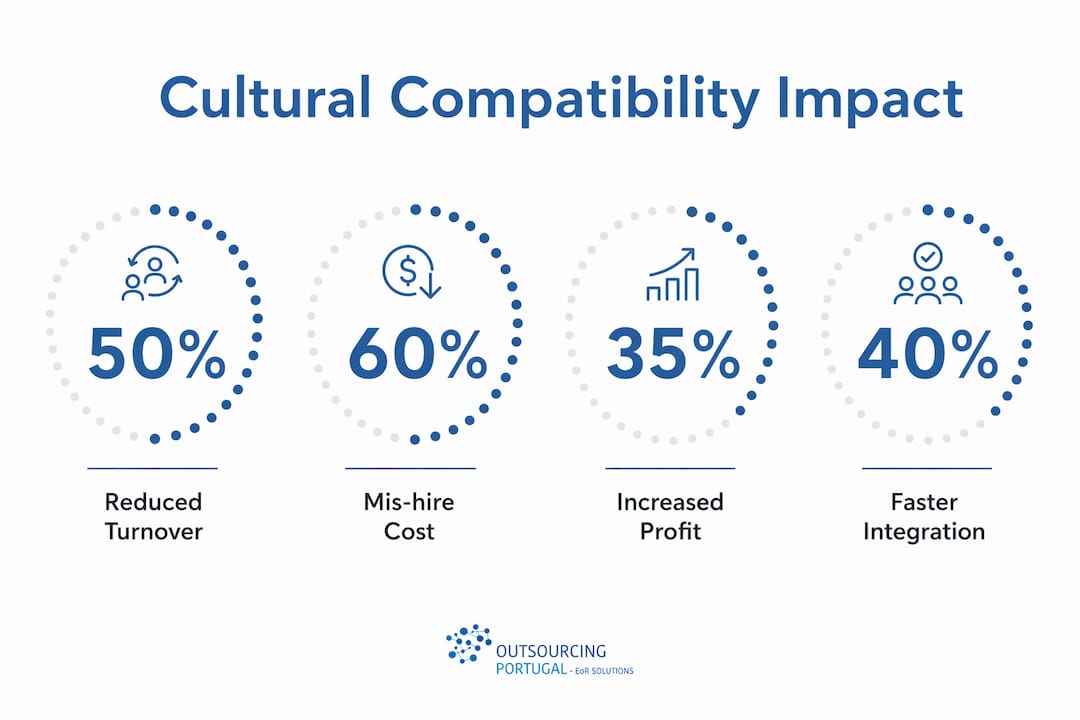
Cultural compatibility is defined as the alignment of values, behaviors, communication styles, and work ethics that enables teams and organizations to function cohesively. For HR professionals managing international workforces, the role of cultural compatibility goes well beyond hiring preference. It directly shapes profitability, retention, and the success of cross-border mergers. Organizations that prioritize cultural alignment are 50% more likely to outperform peers on profitability metrics and show measurably higher employee engagement. That number reframes cultural compatibility from a soft value into a hard business driver.
How does cultural compatibility impact organizational performance?
Cultural alignment is a measurable performance variable, not a management philosophy. When values and working norms match across a team or organization, friction drops, decisions move faster, and employees stay longer.

The financial case is direct. Mis-hires from cultural incompatibility cost 50%–60% of an employee’s annual salary in lost productivity, recruitment, and onboarding expenses. At senior levels, that figure compounds quickly. A single failed executive hire can absorb months of management attention and set back team cohesion by a full quarter.
Poor cultural fit is also a leading driver of first-year turnover. Employees who feel out of step with organizational norms disengage early, often before they have contributed meaningful output. That cycle repeats unless the root cause is addressed at the hiring and onboarding stage.
The impact extends into mergers and acquisitions. Cultural misalignment is a leading cause of decreased deal returns and integration failure. Two organizations can have compatible financials and incompatible cultures, and the culture gap will erode the deal’s value faster than any market variable.
Beyond visible turnover, cultural friction increases cognitive overhead, slows decision-making, and pulls management attention away from growth. These invisible costs undermine performance before any formal problem is reported.
Pro Tip: Track first-year attrition by hiring manager and team. A pattern of early exits from specific teams often signals a cultural alignment gap, not a candidate quality problem.
What is the difference between cultural compatibility, cultural fit, and hiring bias?
Cultural compatibility and cultural fit are often used interchangeably, but the distinction matters enormously in practice. Cultural compatibility refers to alignment with core organizational values and operational norms. Cultural fit, as commonly applied, often slides into subjective preference, and that is where bias enters.
Confusing cultural fit with personality similarity leads to discriminatory hiring and homogeneous workplaces. When a hiring manager rejects a candidate as “not a culture fit” based on communication style or social manner, they are often screening for likeness, not alignment. That reduces diversity and, with it, the range of perspectives that drive innovation.
Labels like “too formal” or “not a team player” frequently disguise subjective bias. Structured behavioral assessments focused on shared values and operational compatibility reduce that risk. They replace gut feel with defined criteria that any hiring panel can apply consistently.
The practical fix is to separate two questions that get conflated:
- Does this candidate share the values and working norms the role requires? This is a compatibility question.
- Do I personally enjoy talking to this candidate? This is a preference question.
Only the first question belongs in a hiring decision. The second, left unchecked, produces teams that think alike and miss problems that diverse perspectives would catch.
“The most critical mistake is treating culture fit as a way to reject diverse candidates rather than as a strategic compatibility framework.” — FTI Consulting and HRKatha analysis
The concept of “culture add” corrects this. A candidate who shares core values but brings a different background, communication style, or problem-solving approach adds to the culture rather than diluting it. HR professionals who build this distinction into their hiring frameworks get both alignment and diversity.
Pro Tip: Define your organization’s non-negotiable values in writing before any hiring round. Assessors who work from a written standard make more consistent and defensible decisions than those relying on impression.
Which cultural dimensions should HR professionals prioritize?
Not all cultural differences carry equal weight in a team context. Some differences are operational and require alignment. Others are stylistic and can coexist without friction. Knowing which is which is the core skill in cultural compatibility assessment.
The dimensions that most directly affect team performance fall into five categories:
- Communication style. Direct versus indirect communication creates misreads across cultures. A Dutch team member’s blunt feedback and a Japanese colleague’s indirect signaling can both be professional. Without shared norms for how feedback is given and received, both parties misinterpret intent.
- Decision-making protocols. Some cultures expect consensus before action. Others expect the senior person to decide and the team to execute. When these norms collide, projects stall and accountability blurs.
- Hierarchy acceptance. High-hierarchy cultures expect formal deference to seniority. Low-hierarchy cultures expect open challenge regardless of title. Mixed teams need explicit ground rules to function.
- Work ethic and time orientation. Attitudes toward deadlines, working hours, and urgency vary widely. These differences are manageable when named, and corrosive when ignored.
- Conflict management. Some teams address disagreement openly. Others avoid direct confrontation entirely. Neither is wrong, but a team that mixes both approaches without a shared protocol will misread silence as agreement and directness as aggression.
Deliberate cultural integration choices about which behaviors must change, which can coexist, and how leadership alignment is preserved improve the odds of successful mergers and functional collaboration. The same logic applies to team building.
The table below maps each dimension to its integration implication:
| Cultural dimension | Integration implication |
|---|---|
| Communication style | Establish shared feedback norms in writing at team launch |
| Decision-making protocol | Clarify who decides and who advises before projects begin |
| Hierarchy acceptance | Set explicit expectations for how seniority operates in meetings |
| Work ethic and time orientation | Agree on deadline standards and response time expectations |
| Conflict management | Create a named process for raising and resolving disagreements |
Leadership culture carries particular weight. When senior leaders model the values they claim to hold, teams align faster. When leadership behavior contradicts stated values, no amount of onboarding material closes the gap.
How can HR professionals apply cultural compatibility to improve retention?
Cultural compatibility principles produce the most value when built into three stages: hiring, onboarding, and ongoing team management. Treating compatibility as a one-time hiring filter misses most of the opportunity.
At the hiring stage, structured behavioral interviews anchored to defined organizational values outperform unstructured conversations. Questions like “Describe how you handled a disagreement with a manager” reveal decision-making and conflict norms far better than “Tell me about yourself.” The checklist for hiring remote teams from Outsourcing-portugal includes communication and working-style alignment criteria that HR teams can adapt directly.
At onboarding, the goal is reducing cognitive overhead. New hires in cross-cultural environments spend significant mental energy decoding unwritten norms. Aligning norms around communication and decision-making early reduces that overhead and frees team energy for high-value work. Structured onboarding that names cultural expectations explicitly, rather than leaving them implicit, shortens the adjustment period and reduces early attrition.
For ongoing team management, the following practices sustain cultural alignment across distributed and multinational teams:
- Hold regular retrospectives that include a norms check, not just a task review.
- Assign cultural integration checkpoints at 30, 60, and 90 days for new hires.
- Use pulse surveys to surface friction before it becomes turnover.
- Train managers to distinguish cultural difference from performance failure.
- Build psychological safety by rewarding candor, not just results.
The multinational HR strategies guide from Outsourcing-portugal covers how to structure these practices across geographically distributed teams. The principle that cultural integration should preserve the best elements of each organization’s culture, rather than imposing uniformity, applies equally to team building as to M&A.
Pro Tip: When onboarding international hires, pair them with a cultural guide, not just a task buddy. The guide’s job is to explain unwritten norms, not deliverables.
Key Takeaways
Cultural compatibility is a measurable business driver that directly determines profitability, retention, and integration success in international organizations.
| Point | Details |
|---|---|
| Compatibility drives profitability | Culturally aligned organizations are 50% more likely to outperform peers on profitability metrics. |
| Mis-hires carry a steep cost | Poor cultural fit costs 50%–60% of annual salary per failed hire in productivity and recruitment losses. |
| Fit and bias must be separated | Structured behavioral assessments based on defined values prevent cultural fit from becoming a bias screen. |
| Five dimensions matter most | Communication, decision-making, hierarchy, work ethic, and conflict management require explicit alignment in international teams. |
| Onboarding is where alignment is built | Naming cultural expectations at onboarding reduces cognitive overhead and cuts early attrition. |
Why cultural compatibility deserves a seat at the leadership table
Most HR teams treat cultural compatibility as a hiring filter. I think that framing undersells it by a wide margin. After working with international organizations building teams across borders, the pattern I see repeatedly is this: companies invest heavily in technical skills assessment and almost nothing in values and norms alignment. Then they wonder why their retention numbers are poor and their cross-border teams underperform.
The uncomfortable truth is that cultural misalignment is often invisible until it is expensive. A team that looks functional on paper can be burning management hours on friction that never shows up in a performance review. By the time turnover spikes, the root cause is six months old.
What I have found actually works is treating cultural compatibility as a continuous practice, not a one-time screen. That means defining your organizational values with enough specificity that a hiring panel can score against them. It means building onboarding that names norms explicitly. And it means training managers to read cultural friction as a systems problem, not a people problem.
The future of international HR is not about finding candidates who fit a single culture. It is about building organizations that can hold multiple cultural identities in productive tension. That requires leaders who are curious about difference, not threatened by it. The organizations I have seen get this right do not just retain people longer. They solve harder problems faster, because they have more ways of seeing.
— Paulo
Building culturally aligned international teams with Outsourcing-portugal
International HR managers who want to put cultural compatibility principles into practice need more than a framework. They need a hiring and onboarding infrastructure that supports cross-cultural integration from day one.
Outsourcing-portugal provides Employer of Record and payroll services designed for international companies hiring in Portugal. The platform handles legal compliance, onboarding, and HR support so managers can focus on building culturally aligned teams rather than navigating local employment law. Portugal’s multilingual, highly educated workforce makes it a natural fit for nearshore teams where cultural compatibility with European and global organizations is already strong. Explore the full range of employment outsourcing services to see how Outsourcing-portugal supports compliant, culturally grounded hiring at scale.
FAQ
What is the role of cultural compatibility in team performance?
Cultural compatibility aligns values, communication styles, and working norms across a team. Organizations that prioritize this alignment are 50% more likely to outperform peers on profitability metrics.
How does cultural misalignment affect mergers and acquisitions?
Cultural misalignment is a leading cause of decreased deal returns and integration failure in M&A. It increases cognitive overhead, slows decision-making, and diverts management attention from execution.
What is the difference between cultural fit and cultural compatibility?
Cultural fit often reflects subjective personality preference, which can mask hiring bias. Cultural compatibility focuses on alignment with defined organizational values and operational norms, assessed through structured behavioral criteria.
How can HR professionals assess cultural compatibility fairly?
Structured behavioral interviews anchored to written organizational values reduce bias and improve consistency. Assessments should evaluate shared values and operational norms, not demographic traits or social similarity.
Why does cultural compatibility matter for international remote teams?
Remote and international teams lack the informal cues that help co-located teams align. Explicit norms around onboarding remote teams and communication protocols replace those cues and reduce friction across time zones and cultural backgrounds.