
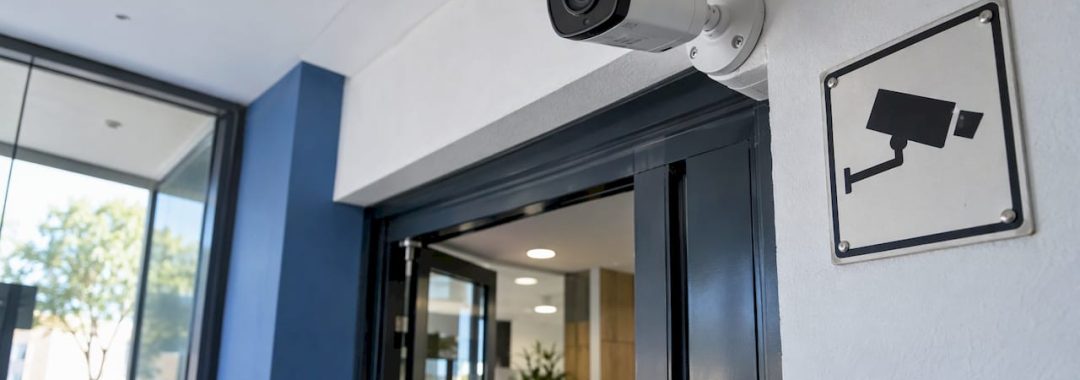
In Portugal, an employer may not use remote surveillance to control how well someone works. Monitoring is lawful only to protect people and property, or where the nature of the job genuinely requires it, and it must pass a documented necessity and proportionality assessment under the GDPR. Background checks are equally restricted: you may verify what the role strictly needs, not everything you can find. If you are an HR manager, founder or CFO hiring in Portugal for the first time, this is stricter than the UK or US norm, and getting it wrong is an administrative offence.
This guide sets out the rules in plain terms, including for remote teams, and shows what to use instead of tracking software. As a Lisbon-based Employer of Record, we handle Portuguese employment compliance for foreign companies every day, which is why we explain it the way we do.
TL;DR
- Remote surveillance to measure performance is prohibited under Article 20 of the Labour Code, and the CNPD (Portugal’s data protection authority) applies this to telework too.
- Monitoring for security needs a lawful purpose, a necessity and proportionality test (in practice a DPIA), the workers’ committee opinion and written notice to staff. Since the GDPR, the CNPD no longer issues prior authorisations.
- Screen capture, keystroke, mouse and web-history tools are not accepted for remote workers. Objectives, reports and meetings are, along with a working-time record.
- Background checks must be strictly necessary for the job and authorised by the candidate. Criminal-record checks need a legal basis.
- Hiring through a local Employer of Record puts these obligations in the hands of a Portuguese specialist from day one.
Table of Contents
- The core rule: no remote control of performance
- When surveillance is allowed: notice and authorisation
- Method by method: what is restricted
- Remote and hybrid workers
- Using monitoring data: a narrow window
- Background checks on candidates
- A practical compliance routine for a foreign employer
- Why a local Employer of Record makes this simpler
- Promo: hiring in Portugal without the compliance guesswork
- Our perspective
- FAQ
- Sources
The core rule: no remote control of performance
The starting point is Article 20 of the Portuguese Labour Code (Lei n.º 7/2009). Under Article 20(1), an employer may not use remote surveillance with technological equipment in the workplace to control professional performance. Article 20(2) allows it only to protect the safety of people and property, or where particular requirements inherent to the activity justify it. Typical examples are CCTV at a warehouse entrance or cameras in a bank branch.
Two points matter for a foreign employer:
- The test is purpose, not the tool. The same camera can be lawful for security and unlawful if you use it to see who is slow.
- The ban covers the digital workplace. Software that watches what people do on a laptop is remote surveillance in the legal sense, not a management tool.
When surveillance is allowed: notice and authorisation
Where security monitoring is justified, three conditions follow.
Tell workers
Under Article 20(3), the employer must inform workers that surveillance exists and why. For CCTV that means a visible notice stating the location is under closed-circuit television surveillance (with a variant if sound is recorded), plus an identifying symbol. Using surveillance to control performance is a “very serious” administrative offence, and failing to post the notices is a “light” one.
Assess necessity and document a DPIA
Article 21 still refers to CNPD authorisation, but since the GDPR the CNPD no longer issues it. The employer must itself show that the measure is necessary, adequate and proportionate, and document this in a data protection impact assessment. The request must include the opinion of the workers’ committee, or proof that you asked for it if none arrived within 10 days. Data collected must be destroyed when the worker moves role or the contract ends.
Meet GDPR principles
Alongside the Labour Code, the GDPR applies in full. Portuguese law firm Fieldfisher summarises the requirements: a lawful basis under Article 6, purpose limitation, data minimisation, fairness and transparency. If you rely on legitimate interests, the interest must be lawful, real, current and specific. The monitoring must be necessary, with no equally effective but less intrusive alternative.
A practical check before any monitoring measure:
- What is the exact purpose?
- Is there a less intrusive way to reach it?
- Have workers been informed in writing?
- Is the data collected proportionate to the purpose?
- Could you justify the measure to the CNPD or a labour court?
If any answer is weak, do not start.
Method by method: what is restricted
| Method | Position in Portugal |
|---|---|
| CCTV | Only for security or activity-specific needs. No sound recording. Cameras must not regularly focus on workers at work. Images cannot be used to control productivity or for discipline. |
| Phone call recording | Admissible only where it follows from the role and the contract, with a contractual clause and signed proof of information. Not a performance tool. |
| GPS in company vehicles | Cannot control performance, prove contract compliance or track private use. |
| Activity or screen-capture software | Not accepted for telework. |
| Health data such as temperature | Employers cannot collect or record it directly. |
The detail behind each row:
- Video. The CNPD’s position, set out in a decision on video surveillance, is that images stay within the controller’s own property and that they may not be used to control productivity or for disciplinary purposes.
- Call recording. A CNPD decision says recording is admissible only where it flows from the employment contract, job category and functional content. It requires a contractual clause and a signed document showing the worker was informed and accepted. Under Article 20, recordings cannot serve to control professional performance.
- GPS. An academic analysis of Portuguese surveillance law reports that the CNPD does not allow vehicle geolocation to control performance or to track a vehicle used privately. Abusive geolocation can justify an employee’s termination for just cause and compensation.
- Health data. According to Ius Laboris, the CNPD has clarified that employers cannot directly collect or record health data such as body temperature. That is for health authorities, including occupational health professionals, or for employee self-monitoring.
Remote and hybrid workers
Most foreign companies hiring in Portugal are hiring remote staff, so this is where the rules bite hardest.
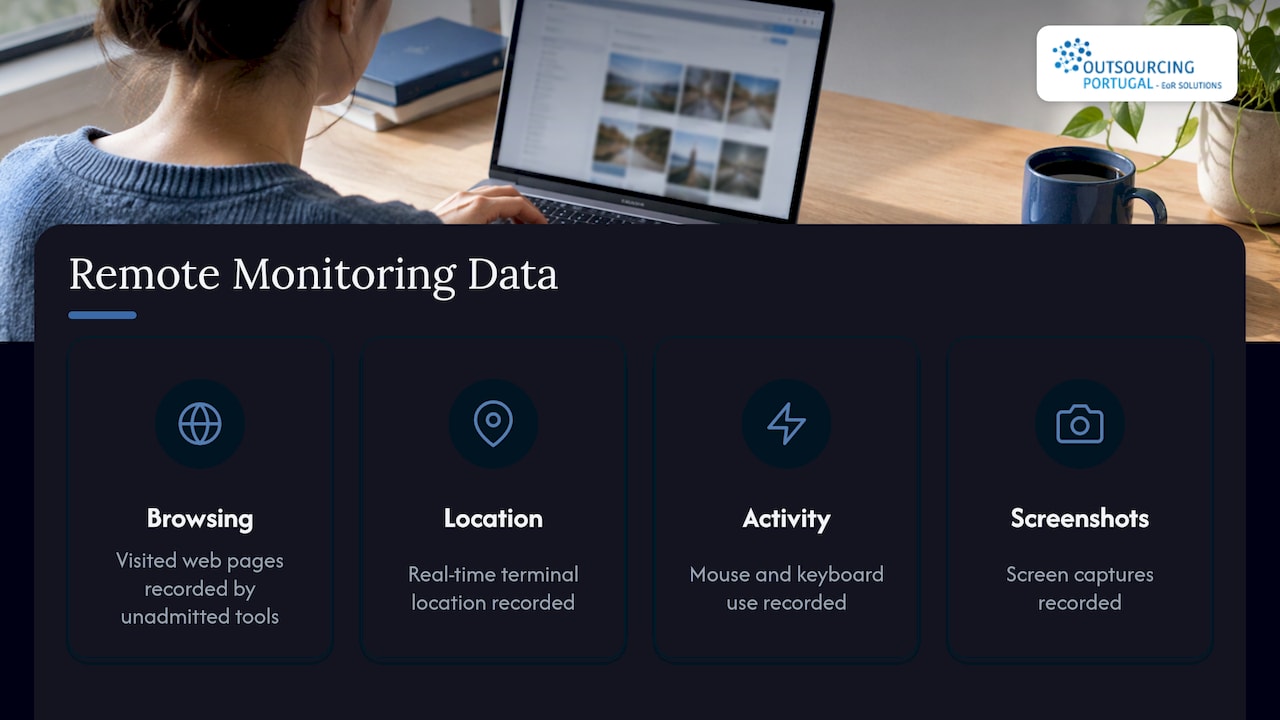
The CNPD’s telework guidance states that the general ban in Article 20(1) fully applies to telework. It names tools such as TimeDoctor, Hubstaff, Timing, ManicTime, TimeCamp, Toggl and Harvest as not admitted. They record visited web pages, real-time terminal location, mouse and keyboard use and screen captures, which breaches data minimisation.
The Labour Code adds a specific rule for remote work. As cited by Fieldfisher, Article 170(5) prohibits capturing and using images, sound, writing, browsing history or other means that may affect the worker’s privacy in the remote context.
What you can do instead
The law does not leave you blind. According to Ius Laboris, employers keep their powers of direction and supervision. The lawful alternatives are:
- setting clear objectives and deadlines;
- requiring progress reports;
- holding regular teleconferences;
- recording working time.
A manager who tracks outcomes rather than keystrokes stays on the right side of the rule and usually gets a better read of real performance.
Working-time records still apply
The CNPD says lawful time-recording tools for remote workers must reproduce on-site registration: the start and end of work and the lunch break, designed according to privacy principles. For an overview of what must be recorded, see our guide to time tracking law in Portugal. If you want to see how privacy-respecting paperless employee time records work in practice, that is the kind of record the rule has in mind: start, end and breaks, nothing more.
Home visits and equipment
For work done at home, CMS’s guide notes that the employer must inform the employee about the characteristics and method of use of every device, programme and system adopted to monitor their activity remotely. Access to the home workplace for health and safety evaluation is limited to 9 a.m. to 7 p.m., may only be used to check work activity and instruments, and only in the employee’s presence.

Using monitoring data: a narrow window
Even lawful monitoring data cannot be used freely. Under Article 28 of Law 58/2019, Portugal’s GDPR implementation law, as summarised by the CGTP-IN trade union guide, images and data from video or remote surveillance may be used only in criminal proceedings. They may be used for disciplinary purposes only if they are also used in a criminal proceeding. In practice, you cannot discipline someone for lateness using camera footage you collected for security.
Transparency is also due. Abreu Advogados’ employment guide explains that a privacy notice containing the GDPR Article 13 or 14 information must be given before or at collection, and missing details within one month.
Consent is a trap. The same guide notes that Article 28 excludes consent as a valid basis where processing results in a benefit for the employee, a position the CNPD considers incompatible with EU law. Because the point is contested, do not build a monitoring programme on employee consent alone. Use a necessity-based lawful basis and document it.
Background checks on candidates
The same logic of necessity and proportionality governs pre-employment checks. Legal practitioners describe the following as generally possible:
- verifying academic qualifications relevant to the job;
- reference checks with explicit consent and no discriminatory questions;
- criminal-record checks where legally required, with written justification;
- review of public social-media profiles;
- credit checks with explicit written consent;
- medical exams or drug and alcohol tests where safety is at stake and the need is justified.
The firm VDA’s employment guide states that an employer may not demand information on a candidate’s private life unless it is strictly necessary and relevant to assess aptitude for the job, with written motivation. Background checks are allowed only where the nature of the job makes the information strictly necessary and the candidate has authorised them.
Criminal records
The clearest case is roles involving regular contact with minors. Under Law 113/2009 as amended, any employer, public or private, hiring for roles involving regular contact with minors must request a criminal record certificate and renew the check every year, as a 2025 CNPD opinion confirms. For an ordinary software or sales role, a blanket criminal-record request would be hard to justify. Document why the role needs one before you ask.
What you must never screen for
Abreu Advogados lists protected characteristics that background checks may not be used to establish. They include age, sex, sexual orientation, marital or family status, economic situation, disability, chronic illness, nationality, ethnic origin, language, religion, political beliefs and union membership. A US-style full-profile screening package will not fit within this list without trimming.
A practical compliance routine for a foreign employer
- Decide what you need to know. For each role, write down the business need: security, working time, quality of output.
- Choose the least intrusive tool. Objectives, reports and meetings first. A time record limited to start, end and breaks for remote staff.
- Rule out banned tools. No keystroke, screenshot, web-history or live-location software for performance purposes.
- Inform in writing. Put the policy in the contract or handbook, in Portuguese and English, before it starts.
- Assess before you deploy. Security cameras and similar systems need a DPIA and the workers’ committee opinion before they go live.
- Limit retention and use. Delete data when it is no longer needed and never use surveillance data for ordinary discipline.
- Screen candidates narrowly. Justify each check in writing and obtain authorisation.
For wider context, our guides to GDPR and employment in Portugal and an HR compliance checklist for Portugal cover the neighbouring obligations.
These rules and CNPD guidance are updated from time to time, so check the CNPD’s published guidance and the current text of the Labour Code before you launch any monitoring measure. A Portuguese employment lawyer should sign off a new CCTV or similar system.
Why a local Employer of Record makes this simpler
The risk for a foreign company is not bad intent. It is importing a policy that works in London or Austin and applying it to a Portuguese employee. Tracking software chosen by a head office can breach Article 20 on the first day.
With an Employer of Record (EOR), a local company becomes the legal employer of your Portuguese staff, while you direct their daily work. Employment contracts, payroll, HR administration and legal compliance sit with a team that works under Portuguese law every day. That means working-time records, workplace policies and candidate checks are set up the Portuguese way from the beginning, not retrofitted after a complaint.
Promo: hiring in Portugal without the compliance guesswork
Outsourcing Portugal is a Lisbon-based Employer of Record and a Portugal-only specialist. We are part of HRB Solutions Group, which has been in the market for 20 years, and we have hired 500+ people. Once a candidate is selected and the offer is agreed, we can hire within 2 days. We offer personal, human support, tailored salary packages with tax optimisation, and one competitive monthly fee.
If you plan to hire in Portugal and want the employment set-up right from the first contract, see our Employer of Record service or contact our team.
Our perspective
Foreign managers often ask us which monitoring tool to install for their Portuguese team. We would start with a different question: what do you need to know, and what is the lightest way to know it?
Portuguese law pushes employers toward management by outcomes: clear objectives, regular reports, meetings and a proper working-time record. We think that is a sound way to run a distributed team anyway, and it is the approach we help our clients set up.
Because we are Portugal-only, we work with these rules every day, and we are available to our clients personally, not through a ticket queue. Our aim is that your Portuguese employees are hired, paid and managed correctly under local law, so that you can concentrate on the work itself.
Outsourcing Portugal Team
FAQ
Can I install time-tracking software on my Portuguese remote employees’ laptops?
Not software that watches activity. The CNPD has said tools that capture screens, web pages, mouse and keyboard use or real-time location are not admitted for telework. A time record that registers the start and end of work and the lunch break is lawful and still required.
Can I read employees’ work emails or check their internet use?
The rules on remote surveillance and on privacy in remote work make this very difficult to justify for performance control. Any access must pass the necessity and proportionality tests and respect GDPR transparency. Take Portuguese legal advice before accessing an individual’s communications.
Can I run a criminal-record check on every new hire?
Only where the law requires it or the job genuinely makes it necessary, with written justification and the candidate’s authorisation. Roles with regular contact with minors are the clearest example. For ordinary office roles, a blanket check is hard to defend.
What happens if I breach the monitoring rules?
Using remote surveillance to control performance is a very serious administrative offence under Article 20(4) of the Labour Code, and failing to post required notices is a light one. GDPR sanctions can apply as well. Data gathered unlawfully is also of little use in discipline.
Does an EOR remove my responsibility for monitoring decisions?
You direct the work, while the EOR is the legal employer. Hiring through a local EOR means contracts, policies and HR administration are handled under Portuguese rules from the start, so your management choices are made on a compliant footing.
Sources
- Lei n.º 7/2009 (Labour Code), Articles 20 and 21
- CNPD guidance on remote control in telework
- CNPD decision on video surveillance
- CNPD decision on call recording
- CNPD opinion 2025/61 on criminal record certificates
- Academic analysis of worker surveillance and control
- Ius Laboris: telework remote control and health data
- Fieldfisher: monitoring of employees in the workplace
- CMS expert guide to remote working in Portugal
- Abreu Advogados: Portugal employment guide 2025
- VDA: employment law in Portugal
- CGTP-IN guide to personality rights
- Legal hiring practices in Portugal
Recommended
- Employment Compliance in Portugal: An HR Checklist
- Time Tracking Law in Portugal: What Employers Must Record
- GDPR (RGPD) and Employment in Portugal: An Employer’s Guide
- EU employment law: Essential compliance for hiring in Portugal
Disclaimer: This article is for general information only and does not constitute legal, tax, or employment advice. Laws and regulations change often. Please consult a qualified professional before making decisions. For Employer of Record services in Portugal, contact Outsourcing Portugal.