
Navigating employment outsourcing in Portugal presents unique legal and administrative challenges for international companies seeking to build teams without establishing local entities. With Portuguese labor law reforms introduced in 2026, understanding compliance requirements has become even more critical. This comprehensive guide walks you through the step-by-step process to streamline your outsourcing operations, ensure regulatory adherence, and integrate your workforce efficiently in Portugal’s competitive talent market.
Table of Contents
- Understanding The Portuguese Labor Landscape For Outsourcing
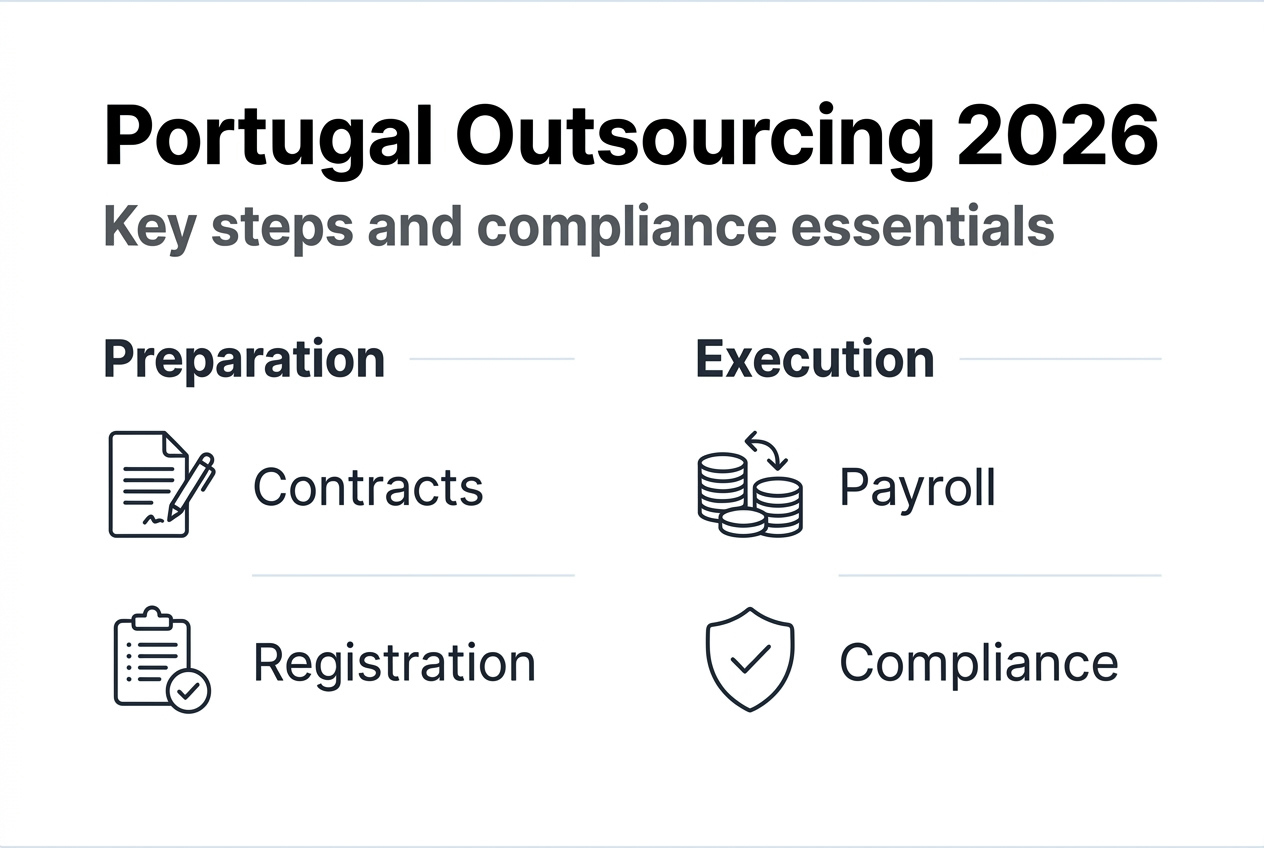
- Preparing For Employment Outsourcing In Portugal: Prerequisites And Compliance
- Executing The Employment Outsourcing Process: Hiring, Payroll, And Compliance Management
- Verifying And Maintaining Compliance: Audit Readiness And Risk Management
- Simplify Your Employment Outsourcing In Portugal With Expert Support
Key takeaways
| Point | Details |
|---|---|
| 2026 labor reforms require updated compliance strategies | Portuguese labor law modernization impacts employment contracts and worker protections |
| Foreign companies can outsource without local subsidiaries | Registration as a foreign employer enables hiring while maintaining international headquarters |
| Employment contracts must meet Labor Code standards | Statutory minimums for wages, hours, and benefits override conflicting contractual terms |
| Minimum wage and social contributions affect budgets | Monthly minimum of €920 plus 23.75% employer social security contributions shape cost planning |
| EOR partnerships simplify compliance | Employer of Record services handle payroll, registrations, and legal requirements efficiently |
Understanding the Portuguese labor landscape for outsourcing
Portugal’s employment framework provides robust protections for workers while creating opportunities for international companies to access a highly skilled, multilingual workforce. The Portuguese government presented a draft labor law reform in July 2025, aiming to modernize the Labour Code with increased flexibility for employers and employees. However, the proposal has faced social controversy and ongoing negotiations, making it essential for outsourcing companies to stay informed about final implementation details.
One fundamental principle governs employment relationships in Portugal: Portuguese labor law overrides conflicting contractual terms where work is performed in the country. This comprehensive protective framework means you cannot simply apply your home country’s employment standards. Key provisions include mandatory minimum wage requirements, maximum working hours, generous holiday entitlements, and strict dismissal procedures outlined in the Labour Code.
Collective Bargaining Agreements (CBAs) add another layer of complexity. These sector-specific agreements often impose higher wage requirements and additional benefits beyond statutory minimums. Before finalizing employment outsourcing arrangements, verify whether your industry falls under a CBA that mandates enhanced compensation packages.
Pro Tip: Partner with EOR Portugal services to navigate the evolving 2026 legal landscape and ensure your contracts remain compliant with both statutory requirements and sector-specific CBAs without building in-house Portuguese legal expertise.
Understanding these foundational elements helps you assess the full scope of compliance obligations before initiating the outsourcing process. The protective nature of Portuguese employment law demands careful preparation and ongoing monitoring to avoid costly violations.
Preparing for employment outsourcing in Portugal: prerequisites and compliance
Before hiring your first employee through outsourcing arrangements in Portugal, you must complete several critical administrative steps. Foreign companies can employ staff without incorporating a local subsidiary by registering as a foreign employer. This registration provides Portuguese tax and social security identification numbers essential for legal employment relationships.

Written employment contracts are strongly recommended and should specify the employee’s role, remuneration structure, working hours, location, and benefits package. While oral agreements have some legal validity, written contracts protect both parties and demonstrate compliance during audits. Every contract must meet Labour Code minimum standards regardless of what you negotiate with employees.
Foreign entities established outside the European Union must appoint a fiscal representative in Portugal. This representative handles tax filings and serves as your official point of contact with Portuguese authorities. EU-based companies can often manage these obligations directly but should verify specific requirements based on their country of establishment.
Statutory entitlements deserve special attention during contract drafting. Portuguese employees typically receive 13th and 14th month salaries (Christmas and vacation bonuses), paid annual leave of 22 working days minimum, and comprehensive social security coverage. Failing to include these provisions creates legal vulnerabilities and employee relations problems.
Navigating Portugal visa and registration requirements for non-EU employees adds another preparation layer. If you plan to relocate international staff to Portugal, coordinate work permits and residence visas before employment start dates to avoid compliance gaps.
Pro Tip: Engage local legal counsel during the preparation phase to draft compliant employment contracts and complete registrations efficiently. The upfront investment in expert guidance prevents expensive corrections and legal disputes down the line.
Executing the employment outsourcing process: hiring, payroll, and compliance management
Once prerequisites are complete, you can begin the operational execution of employment outsourcing in Portugal. Here’s the step-by-step hiring process:
- Define job requirements and create Portuguese-compliant job descriptions that meet local labor standards.
- Source candidates through local recruitment channels or leverage your Employer of Record Portugal partner’s talent networks.
- Conduct interviews and selection processes while adhering to Portuguese anti-discrimination laws.
- Draft employment contracts incorporating all statutory minimums and sector-specific CBA requirements.
- Complete pre-employment formalities including background checks permitted under Portuguese data protection laws.
- Register new employees with social security authorities before their first day of work.
- Provide mandatory onboarding documentation and workplace safety training.
Payroll administration represents one of the most complex aspects of employment outsourcing. Understanding the financial obligations helps you budget accurately and maintain compliance. The 2026 minimum monthly wage of €920 impacts salary calculations for entry-level positions, though most skilled roles command significantly higher compensation.
Employers contribute 23.75% and employees add 11% of gross wages to social security contributions. These mandatory contributions fund healthcare, pensions, unemployment insurance, and other social programs. Personal income tax withholding adds another layer, with employees paying tax rates from 13% up to 48% depending on gross salary levels.
| Payroll Component | Rate/Amount | Responsible Party |
|---|---|---|
| Minimum Monthly Wage | €920 | Employer |
| Employer Social Security | 23.75% of gross | Employer |
| Employee Social Security | 11% of gross | Employee (withheld) |
| Personal Income Tax | 13% to 48% progressive | Employee (withheld) |
| Vacation Bonus (14th month) | 1 month salary | Employer |
| Christmas Bonus (13th month) | 1 month salary | Employer |
Use the Portugal employment cost calculator 2026 to project total employment costs including base salary, social contributions, bonuses, and other statutory benefits. Accurate cost modeling prevents budget surprises and supports informed hiring decisions.
Pro Tip: Outsource payroll management to a specialized Employer of Record payroll service to ensure accurate calculations, timely submissions, and compliance with constantly evolving tax regulations without building internal Portuguese payroll expertise.
Verifying and maintaining compliance: audit readiness and risk management
Ongoing compliance verification protects your company from penalties, reputational damage, and operational disruptions. The Authority for Labour Conditions (ACT) continues inspecting compliance with gender pay gap obligations and other labor standards through regular workplace audits. Companies must demonstrate equal pay for equal work and maintain transparent compensation structures.
Non-compliance carries significant risks beyond financial penalties. Labor violations can result in employee lawsuits, difficulty attracting talent, and damage to your employer brand in Portugal’s competitive talent market. Some violations may even result in criminal liability for company directors.
Staying current with evolving regulations requires continuous monitoring. The 2026 labor reforms, Corporate Sustainability Reporting Directive (CSRD) obligations, and sector-specific regulatory changes demand proactive compliance management. Subscribe to legal updates, attend employer seminars, and maintain relationships with Portuguese employment law specialists.
Best practices for audit readiness and ongoing compliance include:
- Maintain complete employment records for all staff including contracts, payroll documentation, and performance evaluations
- Conduct internal compliance audits quarterly to identify and remedy gaps before official inspections
- Document all employment decisions with clear rationales to defend against discrimination claims
- Implement whistleblower channels allowing employees to report concerns without retaliation
- Train managers on Portuguese employment law fundamentals and complaint handling procedures
- Keep updated employment handbooks reflecting current Portuguese labor standards
- Monitor working hours carefully to prevent unpaid overtime violations
Proactive compliance management transforms regulatory requirements from burdensome obligations into competitive advantages. Companies demonstrating strong labor standards attract top talent, build positive employer reputations, and minimize legal risks that distract from core business objectives.
For international companies working in Portugal without local legal expertise, compliance verification presents ongoing challenges. Consider whether your organization has the internal resources to monitor regulatory changes and implement updates promptly, or whether partnering with local specialists makes strategic sense.
Companies expanding business to Portugal often underestimate the ongoing compliance burden until facing their first audit or employee dispute. Building robust systems during the initial outsourcing setup prevents these painful learning experiences.
Simplify your employment outsourcing in Portugal with expert support
Navigating Portuguese employment law, payroll complexities, and compliance requirements demands significant time and specialized expertise. International companies can avoid these administrative burdens while accessing Portugal’s exceptional talent pool by partnering with experienced service providers.
Outsourcing Portugal delivers comprehensive EOR Portugal services designed specifically for international companies seeking seamless employment solutions without establishing local entities. Our team handles legal registrations, compliant contract drafting, payroll administration, tax filings, and ongoing compliance monitoring so you can focus on building great teams and growing your business.
Benefit from local expertise ensuring full compliance with 2026 labor law reforms and regulatory requirements. We quickly onboard talented professionals on your behalf, managing every administrative detail while you maintain complete operational control over your Portuguese workforce. Our Employer of Record Portugal solutions eliminate the risks and complexities of direct employment while providing the flexibility to scale your team based on business needs.
Frequently asked questions
What is the employment outsourcing process in Portugal?
The process involves registering as a foreign employer, drafting Labor Code compliant contracts, managing payroll with accurate tax and social security withholdings, and maintaining ongoing compliance verification through audits and regulatory monitoring. Foreign companies can complete these steps directly or partner with an Employer of Record to simplify administration.
Can foreign companies hire employees in Portugal without a local subsidiary?
Yes, foreign companies can employ staff by registering as foreign employers and obtaining Portuguese tax and social security numbers. This approach allows international companies to build teams without incorporating local legal entities, though non-EU companies must appoint fiscal representatives.
What are the main compliance requirements for employment outsourcing in Portugal?
Key requirements include adhering to minimum wage standards (€920 monthly in 2026), contributing 23.75% of gross wages to social security, withholding progressive income taxes from 13% to 48%, providing 13th and 14th month salary bonuses, granting minimum 22 days annual leave, and following strict dismissal procedures outlined in the Labour Code.
How do 2026 labor law reforms affect employment outsourcing?
The 2026 reforms modernize the Labour Code with increased flexibility while maintaining strong worker protections. Companies must update employment contracts to reflect new provisions, monitor implementation of final reform details, and ensure ongoing compliance with evolving standards particularly around gender pay equality and working time arrangements.
Why should companies use an Employer of Record for Portuguese employment?
EOR partners simplify complex local labor law requirements, handle payroll administration with accurate tax calculations, manage registrations and compliance monitoring, and reduce legal risks for companies without Portuguese employment law expertise. This allows international businesses to access talent quickly while maintaining full regulatory compliance.
What payroll obligations do employers have in Portugal?
Employers must pay gross salaries meeting minimum wage and CBA standards, contribute 23.75% for social security, withhold 11% employee social security contributions, withhold progressive income taxes, provide Christmas and vacation bonuses equivalent to one month salary each, and process payments through compliant Portuguese payroll systems with proper documentation.